August 6, 2026
Quartz, Granite, Dekton, or Sintered Stone: Which Countertop Should You Choose in 2026
You're renovating your kitchen and you've run into the same question as most of our clients: which material should you choose for the countertop?
It's a decision that will stay with you for 20 years. It shapes the look of the room, your day-to-day maintenance load, and part of your home's resale value. And unlike a backsplash or a cabinet handle, it's not something you can swap out on a Saturday afternoon.
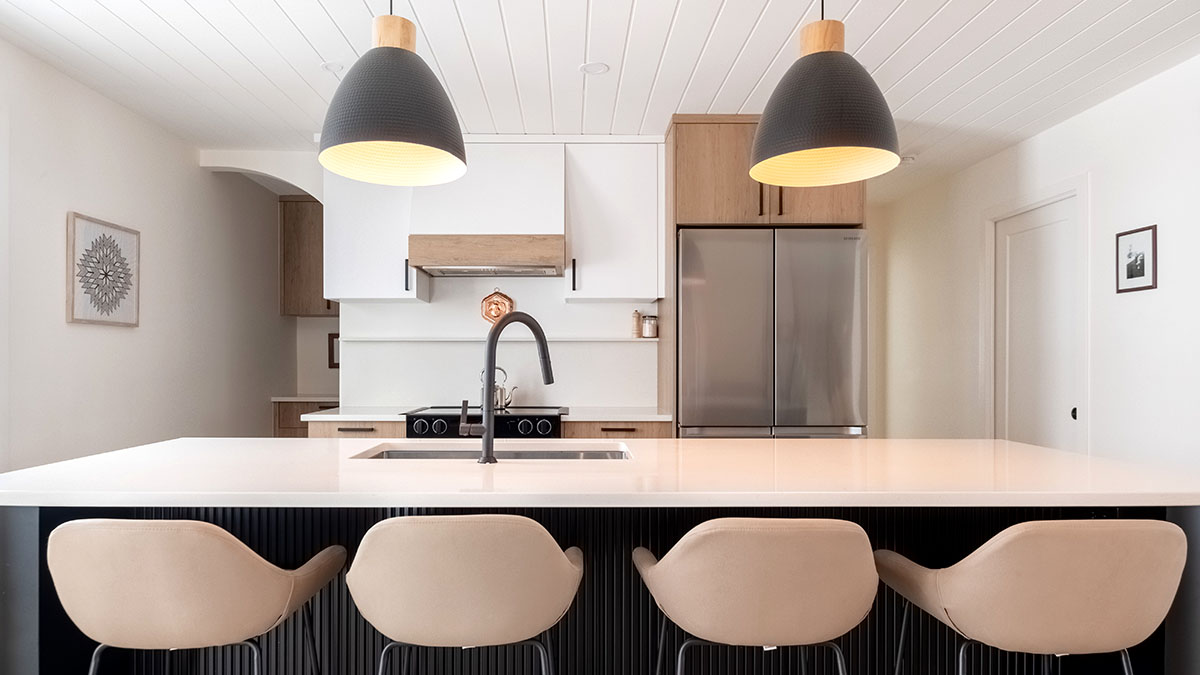
The essentials in 30 seconds
- Quartz — Virtually no maintenance, perfectly consistent appearance. The most popular choice for residential kitchens. Sensitive to direct heat.
- Granite — Natural stone, every slab is unique. Excellent heat resistance, requires periodic sealing.
- Dekton — Cosentino's ultra-compact surface. Maximum resistance, including to UV and outdoor conditions. Higher price and more demanding installation.
- Sintered stone (Neolith, Lapitec) — Also called fritted stone. Performance comparable to Dekton, made of natural minerals without a resin-based binder.
There's no single "best" material. There's the one that matches how you cook, your tolerance for upkeep, and your budget. You can compare our quartz, granite, Dekton, and porcelain countertops right now.
Quartz: minimal maintenance and consistent appearance
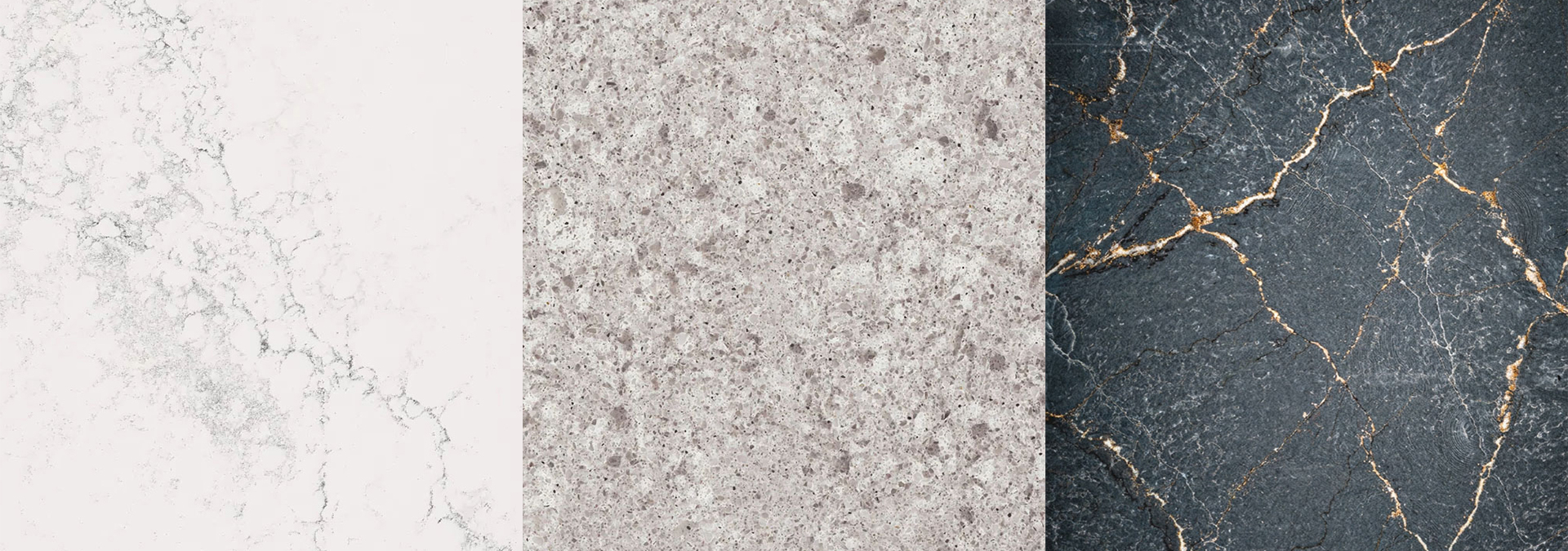
Quartz countertops are an engineered surface made of roughly 90% crushed natural quartz, bound with polymer resins and pigments.

Its strengths
- Non-porous. No sealant needed, ever. Red wine, coffee, and olive oil don't penetrate the surface.
- Visual consistency. What you see on the sample is exactly what you get. That's a major advantage on large islands, where slab-to-slab variation is immediately noticeable.
- Real-world maintenance: soapy water, a cloth, that's it.
Its limitations
- Limited heat tolerance. The resin can yellow or mark under intense direct heat. A pan straight off the burner or a slow cooker left in place for hours can leave a permanent mark. A trivet solves the problem, but you need to make it a habit.
- Long-term UV sensitivity. A quartz countertop installed in front of a large south-facing window can fade slightly over the years. Let us know at the planning stage — some collections are better stabilized, and this is a case where Dekton is worth considering.
Who is it for? Busy families, anyone who wants a spotless kitchen without having to think about it, and projects where visual uniformity matters most.
Granite: natural stone and its heat resistance
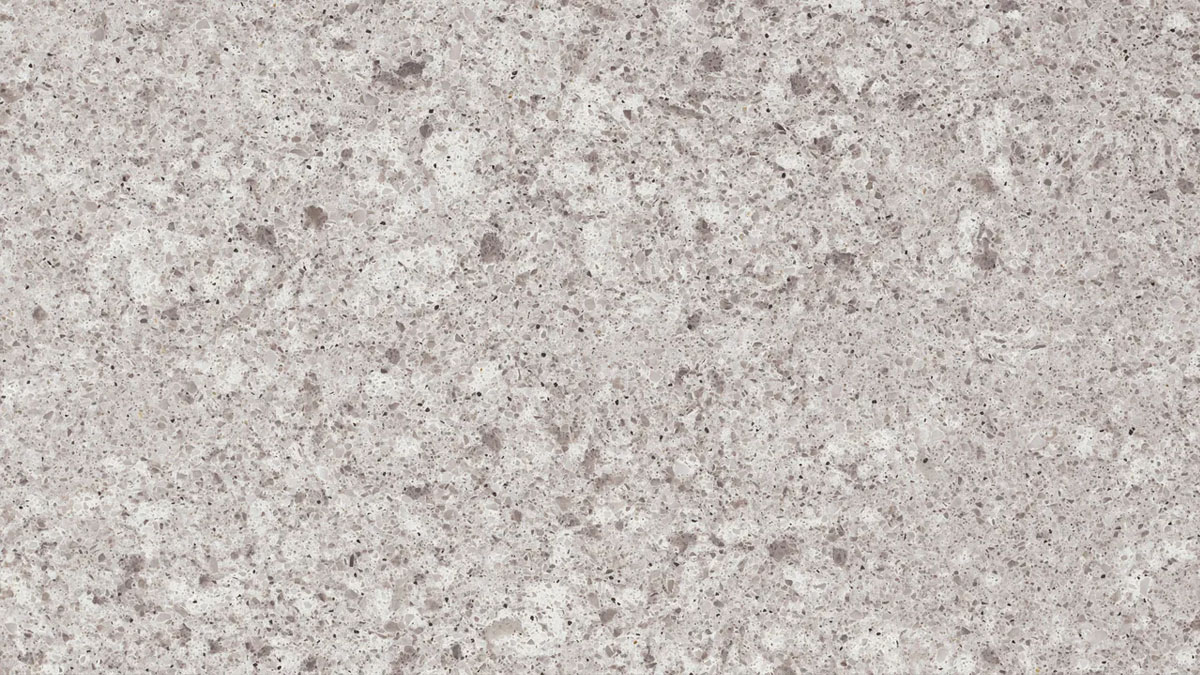
Every granite slab is quarried and cut from a single, unique block. No two are alike.
Its strengths
- Excellent heat resistance. A hot pot placed directly on the countertop won't damage the stone.
- Very good scratch resistance.
- A character nothing else replicates. The veining, crystals, and depth of tone in natural stone remain unmatched by manufactured products.
- Strong perceived resale value: granite remains a recognized marker of quality among buyers.
Its limitations
- Porous. A sealant must be applied at installation and reapplied roughly every 1 to 2 years, depending on use and stone type. It takes 20 minutes, but it can't be forgotten.
- Variation between slabs. You can't order from a photo: you need to go see and reserve your slab at the supplier. We accompany our clients through this step — a one-hour visit that prevents a 20-year disappointment.
Who is it for? Those who want authenticity, who cook a lot, and who accept light but recurring maintenance.
Dekton: the ultra-compact surface
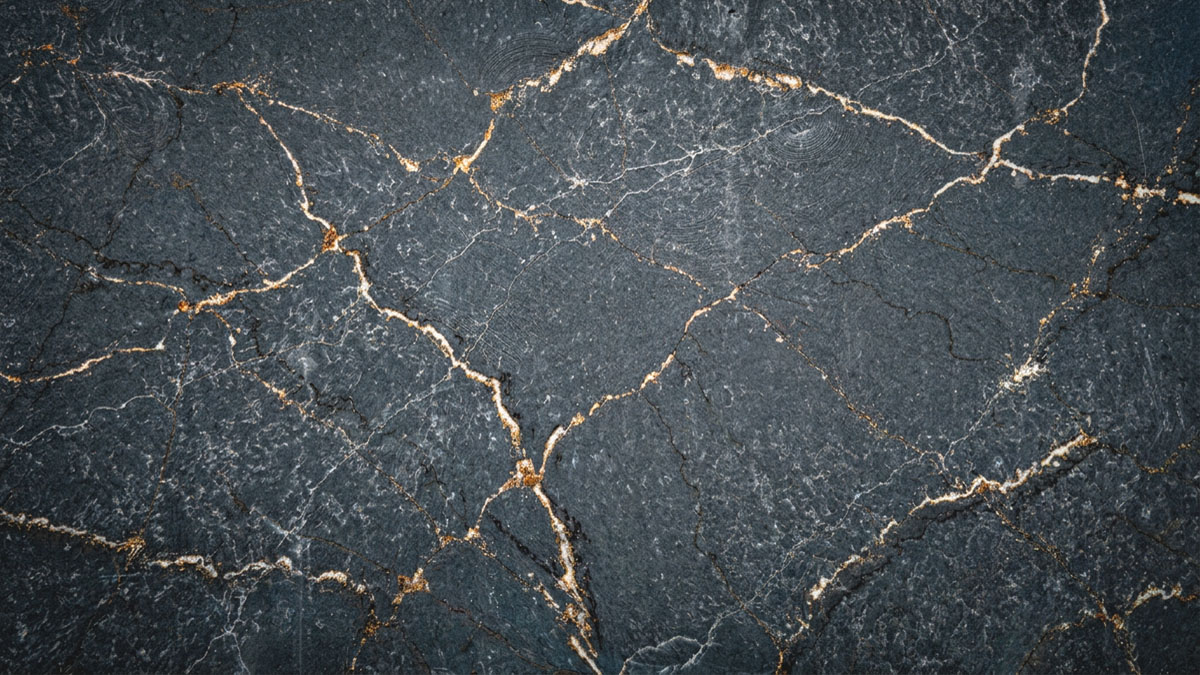
Dekton, made by Cosentino, is produced through high-pressure, high-temperature sintering of a blend of glass, porcelain, and quartz.
Its strengths
- Very high heat resistance. You can set a dish straight from the oven on it without a trivet.
- UV-stable. Along with sintered stone, it's the only material group we recommend without reservation for an outdoor kitchen or a three-season patio.
- Among the best stain and chemical resistance on the market.
- Large-format panels that reduce the number of seams on a large island.
Its limitations
- Higher cost than quartz or granite.
- Demanding cutting and installation. The material is extremely hard and its edges can chip under a hard impact or careless handling. It's a surface that forgives little mishandling — which is why we adjust the job site schedule so the panel is handled only once, and why the cabinets must be perfectly ready before it's delivered.
Who is it for? High-end projects, outdoor kitchens, and serious cooks who want zero usage restrictions.
Sintered stone: same family, a different approach
Neolith, Lapitec, and other sintered stones — also called fritted stones — recreate in a few hours the compression process that forms natural rock over millennia.
Its strengths
- Made of natural minerals, without a petroleum-based resin binder — unlike engineered quartz.
- Completely non-porous, and resistant to fire, chemicals, and UV.
- Performance very close to Dekton — the two technically belong to the same family of ultra-compact surfaces.
Its limitations
- Extreme hardness requiring specialized tooling on the fabrication side, which limits the number of shops able to work it well.
- Premium pricing, comparable to or higher than Dekton.
Who is it for? Homeowners who prioritize mineral composition and very long-term durability, with a clean design aesthetic.
2026 comparison table
| Feature | Quartz | Granite | Dekton | Sintered stone |
|---|---|---|---|---|
| Heat resistance | Medium | Excellent | Maximum | Maximum |
| Stain resistance | Excellent | Good (if sealed) | Maximum | Maximum |
| Maintenance | Very low | Moderate (sealant every 1-2 years) | Very low | Very low |
| UV / outdoor durability | Not recommended | Possible, with care | Yes | Yes |
| Appearance consistency | Perfect | Variable (unique slab) | High | High |
| Recommended for | Zero maintenance | Natural look | Extreme performance | Mineral composition |
Matching your countertop to your cabinets
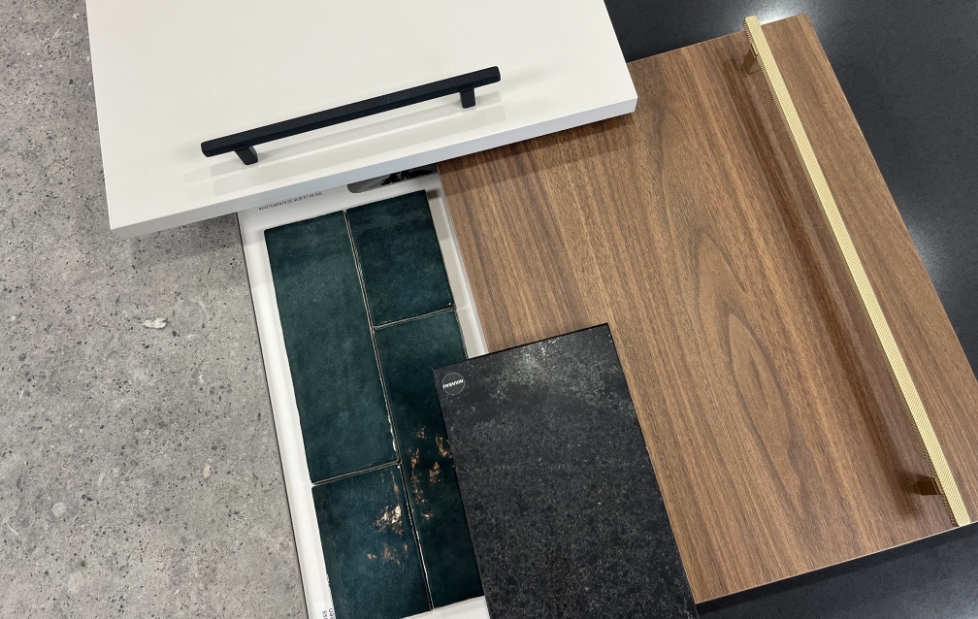
This is the question that comes up most often in the showroom, and the one no materials comparison covers: a countertop isn't chosen in isolation. It's chosen against a cabinet — our inspiration gallery is a good place to start spotting combinations you like.
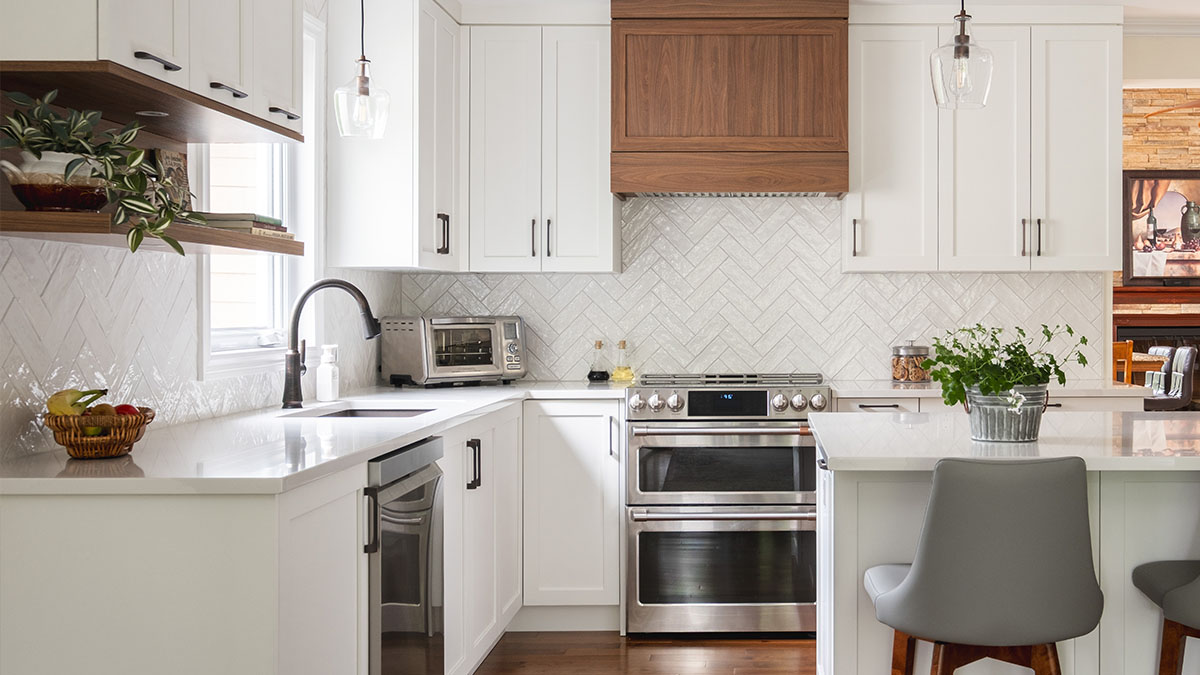
Which order should you decide in? It depends on the material — this is exactly the kind of tradeoff our kitchen designers work through with you, sample in hand.
- If you're going with quartz, choose the cabinets first. There are hundreds of quartz shades: you'll always find one that matches. The reverse isn't true — far fewer cabinet finishes truly work with a given white.
- If you're going with granite or a natural stone, choose the slab first. It's unique, its veining is fixed, and it's what will dictate the cabinet shade that shows it off best.
Three common pitfalls
White on white. A pure white countertop against a pure white cabinet almost never gives the result people expect: one of the two will end up looking yellow, gray, or dingy by comparison. You need to either embrace a slight temperature shift or introduce some veining.
All-matte. Matte finishes are beautiful and hide fingerprints well — but a matte countertop on a matte cabinet, with no sheen contrast at all, flattens the room. On the other hand, matte surfaces show hard-water marks more, which matters in a hard-water house.
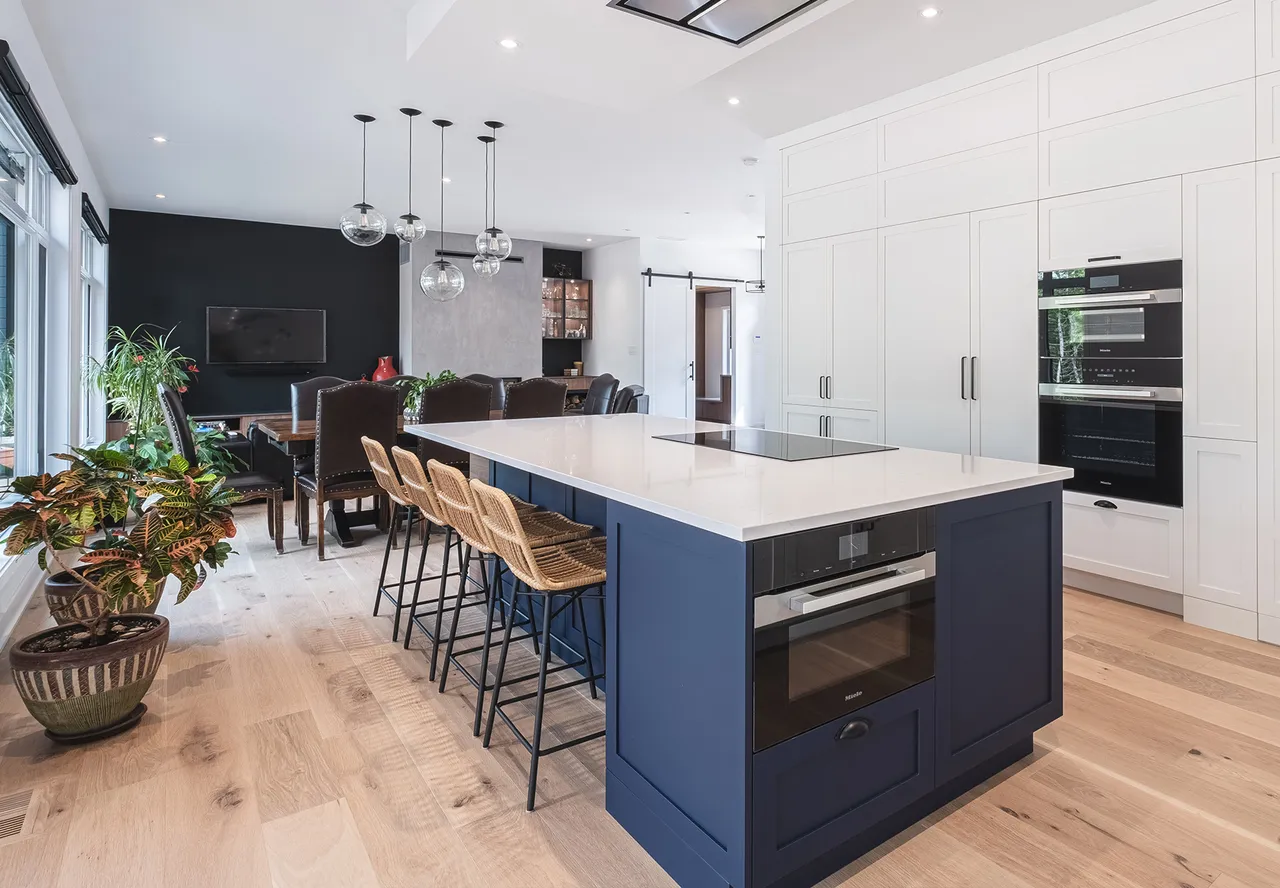
The contrasting island. If you choose an island in a different color from your perimeter cabinets — very popular right now — the countertop becomes the element that ties everything together. Choosing two different countertops for the island and the perimeter is possible, but it's an exercise that fails more often than it succeeds.
Planning a full kitchen? The countertop is one decision among about twenty, and it comes after the kitchen cabinets, not before.
The key to a countertop's durability
Cabinets are our trade. That's also why, project after project, we see what actually damages a countertop — and it's almost never the slab. It's what's underneath.
The cabinets. A countertop sits on cabinets. If they aren't perfectly level, the slab works against itself, the seam opens up, and a 3 cm stone can crack under its own stress. Cabinet leveling doesn't show in the finished result. Yet it's what determines whether your countertop will hold up.
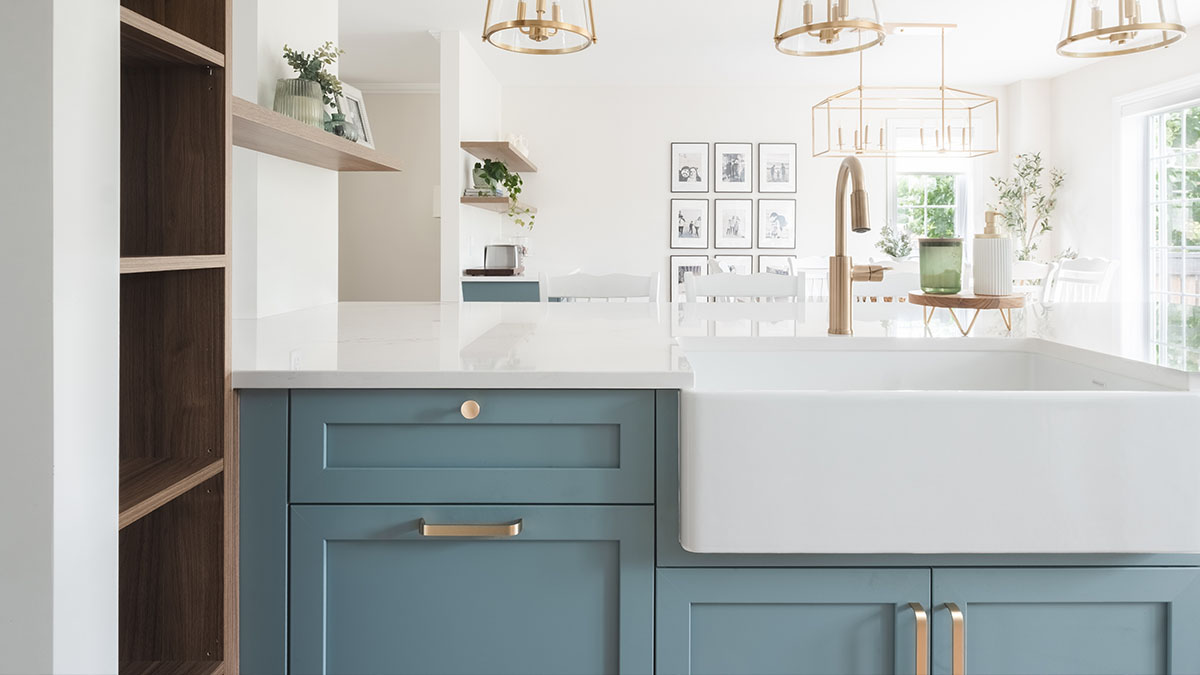
Island overhangs. An overhang meant to seat three people requires steel supports anchored into the structure — not brackets screwed into a cabinet panel. That decision gets made at the cabinet planning stage, not the day the stone is delivered.
Sequencing. The countertop is measured after the cabinets are installed, never before. The undermount sink is chosen before the measurement. Water supply and drain lines need to be in place before the fabricator shows up. Get just one of these steps out of order, and you lose two to three weeks while a new slab is fabricated.
Seams. On a large island, a seam is sometimes unavoidable — slabs have maximum dimensions. What matters is where it falls. We review the cutting plan with the fabricator before production starts and have you approve it, so the seam lands in the least visible spot and lines up with the veining.
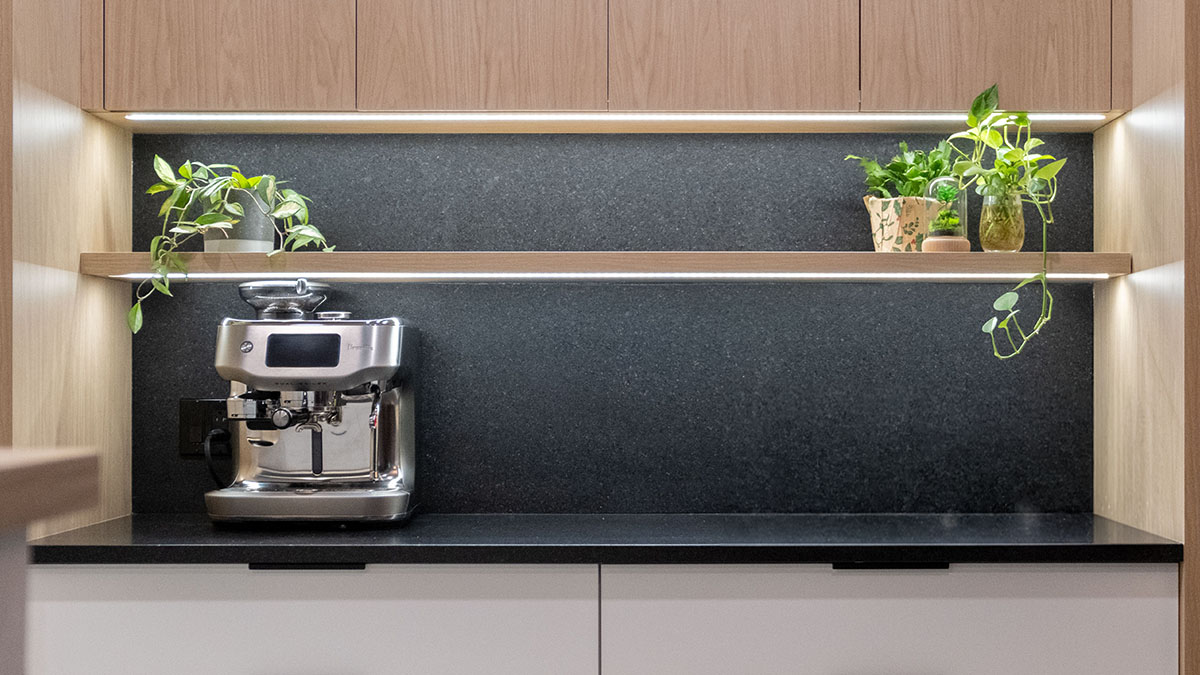
The backsplash and the wall. A wall that isn't square shows down to the millimeter once a stone panel rests against it. You fix the wall, not the stone.
This is exactly the kind of sequencing work that sets apart a kitchen designed as a whole from one assembled piece by piece — and it's what we coordinate as part of our turnkey renovation service.
What about the bathroom?
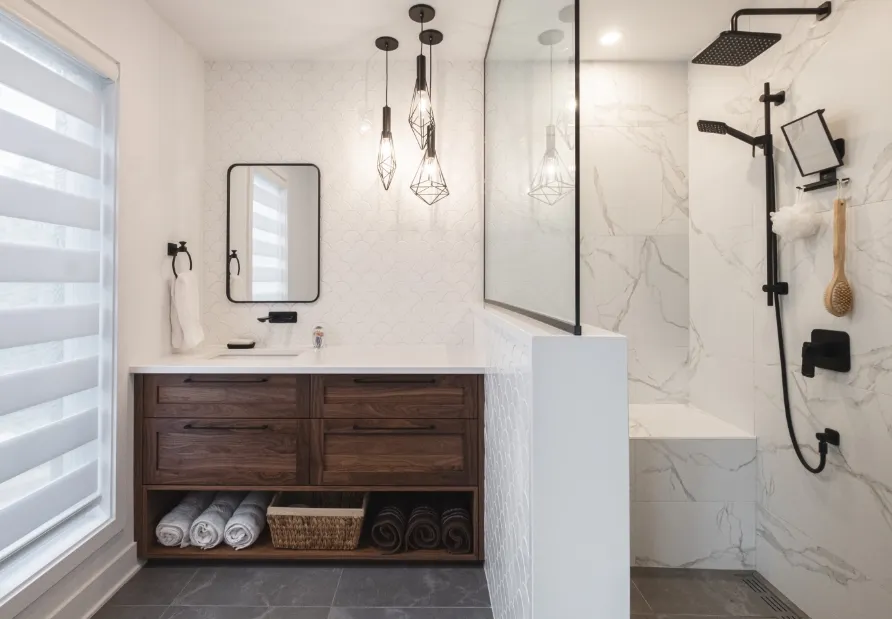
A vanity countertop follows different constraints, and reaching for the same material as the kitchen isn't always the right call.
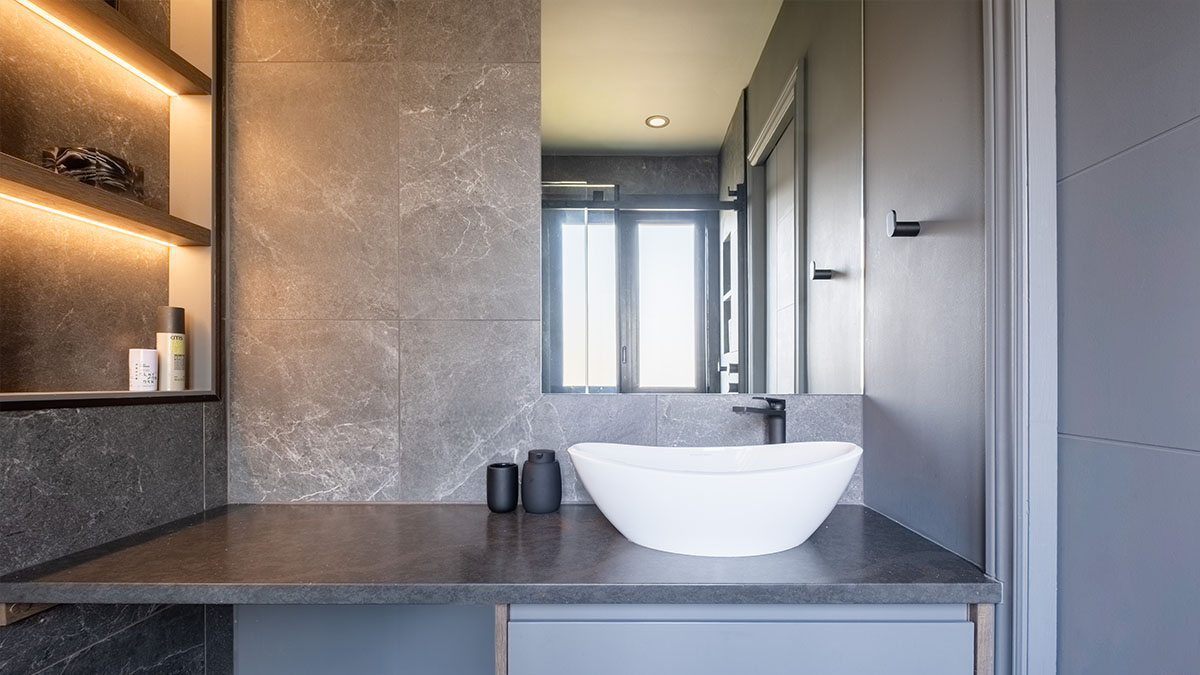
- Heat is no longer a factor. Granite's and Dekton's main selling point loses its edge. Quartz becomes all the more relevant.
- The stains change. Hair dye, toothpaste, nail polish, acidic products: these are a vanity's real threats. A non-porous surface — quartz, Dekton, sintered stone — has a clear advantage here over unsealed granite.
- The surfaces are small. A vanity is often just 10 to 15 sq. ft. The extra cost of a premium material, which would be prohibitive across a full kitchen, becomes very affordable here. It's often the room where you can afford the material you wished you'd had in the kitchen.
- Constant humidity favors non-porous materials and well-executed seams around the sink.
For the full range of storage and finish options, see our bathroom cabinets page.
Choosing in three questions
Is your kitchen heavily used every day? → Quartz (zero maintenance) or Dekton (no usage restrictions).
Do you cook a lot at high heat, or are you installing an outdoor countertop? → Dekton or sintered stone. Granite also works well indoors.
Do you want authentic natural stone on a controlled budget? → Granite, accepting periodic sealing.
Menuitech: kitchen and bathroom cabinets, Mirabel
We've been designing and installing kitchen and bathroom cabinets for [X] years, for renovations and new construction alike, from our base in Mirabel. A countertop is never a standalone product for us: it's the surface that crowns a whole we've designed, measured, and installed.
Specifically, on the countertop side, we:
- Help you choose the material based on how you actually use your kitchen and your cabinet finish.
- Select and coordinate the fabricator, and remain your single point of contact.
- Prepare the foundation: level cabinets, island reinforcement, plumbing and electrical in place before measurements are taken.
- Review and approve the cutting plan with you before production.
- Manage delivery and installation.
We serve Mirabel, Blainville, Saint-Jérôme, Boisbriand, Sainte-Thérèse, Lorraine, Rosemère, Terrebonne, Laval, and the entire North Shore and Laurentians region.
RBQ license no. 56375017-01
Discover more kitchen and bathroom projects by Menuitech in our project gallery.
See it before you choose it
No comparison replaces the moment you put your hand on the surface and see it next to the cabinet door it will pair with.
Contact us to schedule a 30-minute meeting at our showroom in Mirabel. Bring your plans or photos, leave with the samples you're interested in, and a clear picture of your budget.
Frequently asked questions
Does Menuitech manufacture countertops? No. Our specialty is kitchen and bathroom cabinetry. We advise on countertop material, coordinate the fabricator, and handle installation as part of your project. This independence lets us recommend the surface that fits your use and your cabinets, rather than whatever happens to be in an inventory.
Which countertop should I choose with white cabinets? Avoid pure white against pure white: one of the two will always end up looking dull. A gray- or beige-veined quartz, or a light-based granite, creates the depth that's otherwise missing. Bring a cabinet door with you when choosing your sample — it's the only reliable way to confirm the match.
What's the difference between Dekton and sintered stone? Dekton is a sintered stone: it's Cosentino's brand name. In the industry, Dekton is often distinguished from other brands (Neolith, Lapitec) by exact composition and grain, but performance is very comparable.
Is Dekton unbreakable? No. It's extremely resistant to everyday use, but its edges can chip under a hard impact. The risk mainly comes up during handling and installation, which is why job site preparation matters so much.
Does quartz yellow in the sun? Prolonged direct UV exposure can cause slight discoloration in some shades, especially whites and pale tones. For an island in front of a south-facing bay window, or for any outdoor countertop, Dekton or sintered stone are the right choices.
Can you cut directly on the countertop? Technically, granite, Dekton, and sintered stone can withstand a blade. But you'll ruin your knives long before you damage the countertop. A cutting board is still recommended on every material.
Which countertop adds the most resale value? Granite and quartz remain the references recognized by buyers and appraisers. That said, in a kitchen, the cabinets represent the largest share of the budget and the first thing people notice — the countertop enhances them, but rarely saves a weak kitchen on its own.